
The Last Supper as a Way Forward

Body, blood, and the awakening of the soul
By Bill Dandie
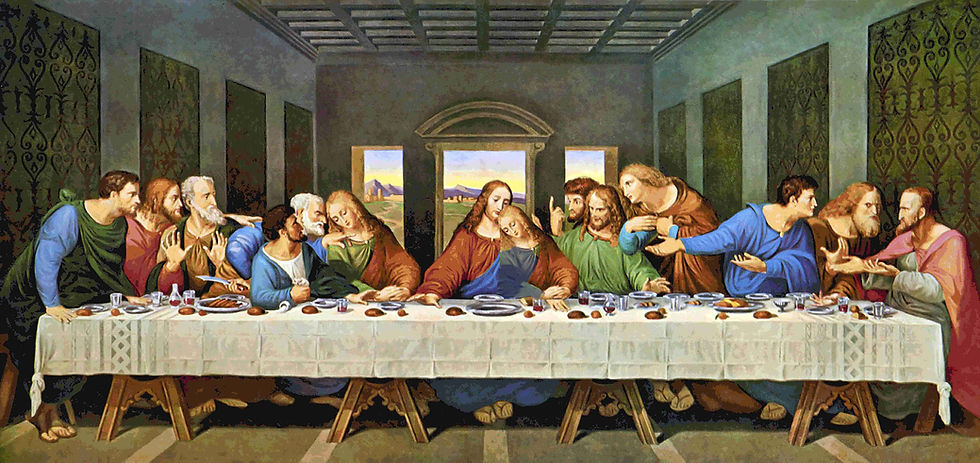
During Holy Week in 2025, I began to understand the Last Supper differently. Through fasting and meditation, the story became a pattern I could participate in: stepping away from desire, surrendering an identity, entering stillness, and returning to life renewed.

Easter Sunday fell on April 20, my birthday. That meeting of personal birth and spiritual rebirth gave the experience particular meaning. What follows is the theory that grew from it—a contemplative reading rooted in my experience, with biblical connections that invite further exploration.
The body and the life within
At the Last Supper, Jesus identifies bread with his body and the cup with his blood. The Gospel accounts connect these words with his coming death, covenant, and remembrance (Matthew 26:26–29; Luke 22:19–20).
My question is whether those symbols can also offer a way forward for the person seeking a direct relationship with the divine.
I understand the body as our outward, embodied existence: the part of us that encounters food, comfort, pleasure, and desire. Fasting brings attention to that relationship. When I step away from food for a time, I encounter the habits and attachments that ordinarily move through my day unnoticed.
Blood represents the life within. Leviticus 17:11 associates blood with life. Hebrews 9:13–14 moves from outward purification to the cleansing of conscience through Christ’s blood. These passages do not say that blood means meditation, but they give the symbol an inward dimension.
In my reading, body and blood become two aspects of participation: bodily surrender through fasting and inward attention through meditation or prayer.
My middle triangle: Mind, Body, Soul
This is the work of my middle triangle.

The body participates through fasting. The mind participates through meditation and prayer. The soul awakens as these practices meet.
By awakening, I mean becoming aware of a deeper relationship with God—one that can be obscured by appetite, distraction, fear, and the identities I defend. I experience prayer as speaking, listening, observing, and allowing my own will to loosen its grip.
Jesus’s teaching in Matthew 6 gives fasting and prayer a shared direction. Both are directed toward the Father in secret. The outward act and the inward intention belong together.
Fasting itself can bring thoughts and emotions to the surface. Prayer involves the body as well as the mind. My triangle holds these practices together as parts of one movement toward awareness.

Four days of participation
During my Holy Week fast, I experienced the Easter story as a sequence:
Thursday: the Last Supper. A threshold at which I step away from food and habitual desire.
Friday: crucifixion. I face an attachment or false identity and practise releasing it.
Saturday: entombment. I remain in stillness, without demanding an immediate answer.
Sunday: resurrection. I return to daily life with the responsibility to embody what I have discovered.
Thursday evening to Sunday evening is approximately 72 hours across four calendar days.
This is my interpretation of the sequence, rather than a claim that the Gospels prescribe that exact fast.
There is, however, a direct connection between Jesus’s departure and fasting. In Matthew 9:15, he says his followers will fast when the bridegroom is taken away. After the Last Supper, his own movement into prayer and surrender offers another connection (Luke 22:39–42).
Together, these passages invite me to consider how remembrance might become practice.
A story for the crowd, an explanation for the disciples
Jesus taught through parables and symbolic language, while also giving his disciples more direct explanations. Mark 4:33–34 describes him speaking to the crowds in parables and explaining his teaching privately to his disciples.
That distinction matters to my inquiry. A teaching can be encountered first as a story and later understood through closer attention and participation. A symbol can remain with someone long before its personal significance becomes apparent.
The Last Supper is not explicitly called a parable in these passages. Still, its symbolic actions invite a question: could body and blood carry a practical, contemplative meaning alongside their covenantal meaning?
I cannot establish that Jesus concealed my particular triangle in those words. I can describe how the symbols became meaningful through my practice.
I feel a close, direct relationship with Jesus through this process. That is the language of my spiritual experience. It does not make me an authority over another person’s relationship with him.
What can happen to a living teaching?
My experience also raises a difficult question about religious institutions: can a ritual survive while its invitation to personal transformation becomes less visible?
I question whether institutional Christianity has sometimes placed too much distance between the individual and the direct encounter with God. Yet Catholic tradition also preserves fasting, meditation, and contemplative prayer. A claim that the Church deliberately replaced Jesus’s original message would require historical evidence beyond my experience.
My challenge is therefore practical: when we remember Jesus, do we also make room to live what we remember?
April 20 and April 21
On April 20, 2025, Easter and my birthday coincided with my experience of renewal. Pope Francis died the following morning, April 21. That date is also Rome’s traditional founding anniversary, conventionally dated to 753 BCE or 2,777 years before.
The sequence struck me deeply. I hold it as a meaningful coincidence within my own story. It does not establish a causal connection or prove my interpretation of Jesus’s teaching.
The foundation of my theory remains the practice itself: what I encountered when I stepped away from habitual desire and became quiet enough to listen.
A way to remember
In John 6:56, Jesus connects receiving his flesh and blood with mutual indwelling—remaining in him, and he in the believer.
For me, that brings the inquiry back to relationship. The body and the life within belong to one whole person. Fasting and prayer become ways of bringing that whole person into attention, surrender, and communion.
This is what my middle triangle expresses: the body fasts, the mind enters prayerful attention, and the soul awakens.
The question I offer fellow seekers is simple: what might remembrance become when we give it room to change the way we live?


Comments