
The Sun Hidden in Plain Sight

What if one of the greatest spiritual truths has been in front of us all along?

Not hidden.
Not secret.
Simply wrapped in a different story.
For thousands of years, civilizations honored the Sun—not merely as the physical star that gives life, but as the visible symbol of divine Light, consciousness, order, and rebirth. Ancient Egypt, Persia, Greece, and countless other cultures encoded this understanding into their myths and sacred stories.
When Christianity emerged, many scholars have noted similarities between earlier solar symbolism and elements of the Gospel narrative.
Figures such as Horus and Mithras are often discussed in these comparisons, although historians debate how direct these connections truly are. Whether by inheritance, adaptation, or universal symbolism, the parallels invite reflection.
The Star in the East.
The Three Kings.
December 25.
Death.
Resurrection.
Light overcoming darkness.
These are all powerful images that resonate with the annual journey of the Sun.
What if "Son of God" also points toward the "Sun of God"?
Not to diminish Jesus, but perhaps to understand him more deeply.
The Cosmic Teacher
The Sun sits at the center of our solar system.
Everything revolves around it.
Its light gives life.
Without it, nothing grows.
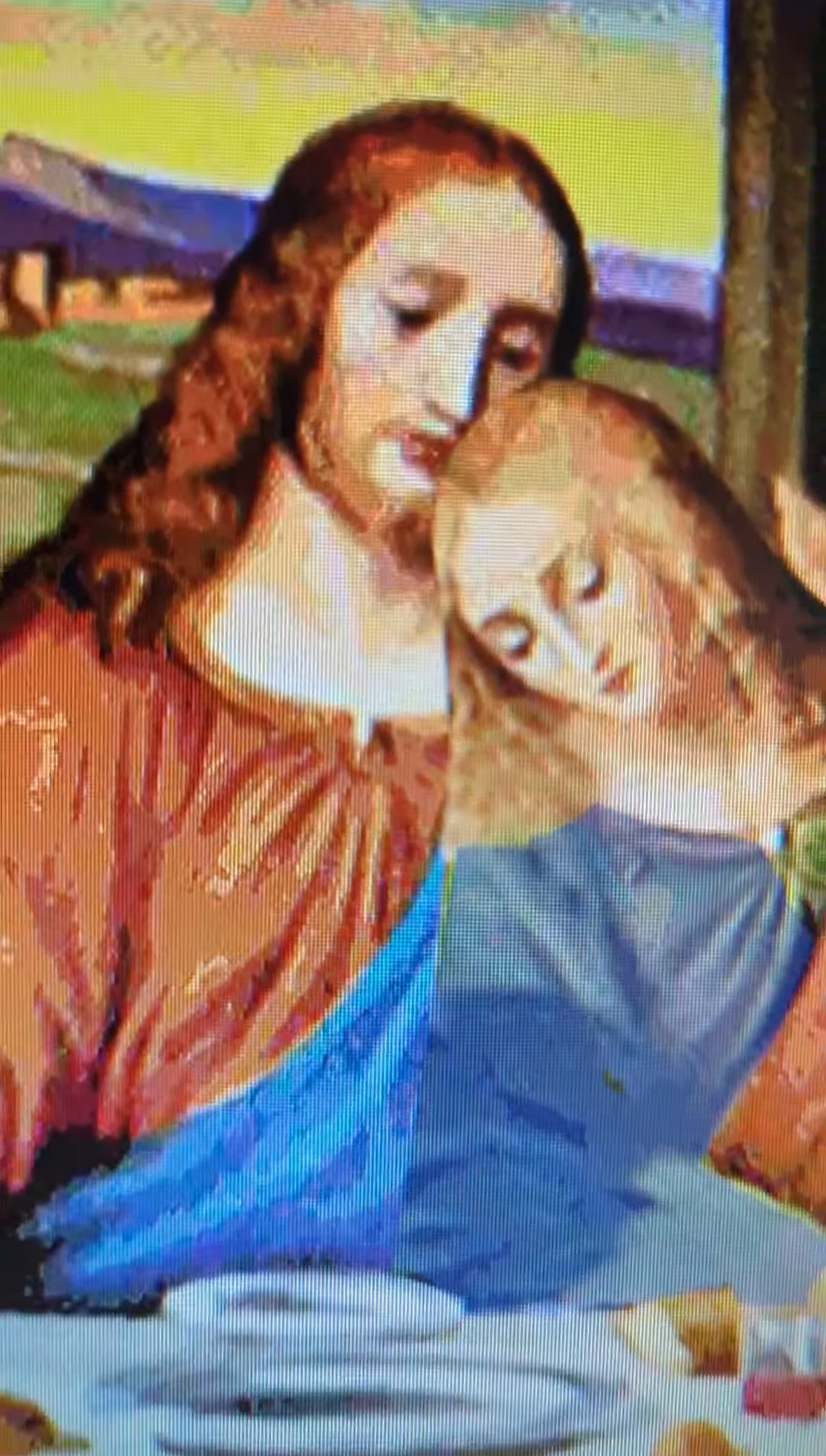
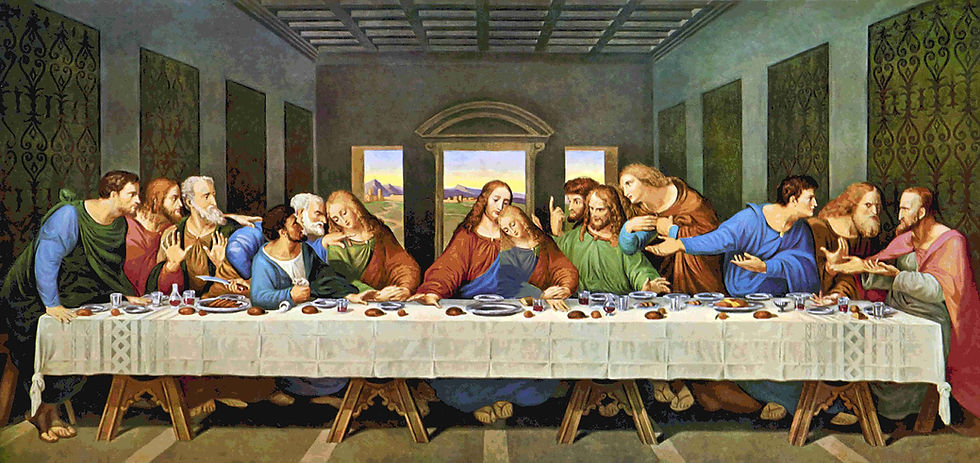
During the Last Supper, Leonardo da Vinci placed Jesus at the center of the table, with twelve disciples surrounding Him.
Many see this as representing Christ and His apostles.
Others see an additional symbolic layer:
The Sun surrounded by the twelve constellations of the zodiac.
Both interpretations can coexist.
Great art often carries multiple levels of meaning.
Mary and the Dawn
For centuries, the Church emphasized Jesus while Mary Magdalene often occupied a diminished or misunderstood role.
Then came a remarkable statement.

In September 2013, Pope Francis wrote:
"Jesus is the sun and Mary the dawn announcing his rising."
To many, this was simply beautiful poetic language.
To me, it points toward something much older.
The dawn and the Sun.
The Divine Feminine and Divine Masculine.
Not opposing one another, but working together.
Creation has always required both.
Easter 2025
I experienced this symbolism in a deeply personal way.
During Holy Week in 2025, I completed a 72-hour fast.
On Thursday—the day of the Last Supper—I ate my final meal.
On Friday, I consciously crucified what no longer served me.
On Saturday, I sat quietly, received, and reflected.
On Easter Sunday—April 20, my birthday—I rose, integrated what I had learned, and chose action.
The following day, Pope Francis died.
History records the death of Jesus.
My experience led me to ask whether the deeper invitation is not simply to remember one person's death, but to live our own resurrection.
I do not claim this as proof of anything.
I received it as a powerful personal sign.
The Church's Gift—and Its Shadow
I believe the Catholic Church has preserved tremendous spiritual wisdom.
I also believe that parts of the original symbolic language may have become obscured over centuries.
Institutions often protect doctrine.
Mystics seek direct experience.
Perhaps both have served a purpose.
Even if certain teachings became wrapped in literal interpretation, the energy beneath them remains alive.
Truth has a remarkable way of surviving.
Following the Light
Science tells us our Sun is moving around the Milky Way toward what astronomers call the Great Attractor at roughly 828,000 km/h.
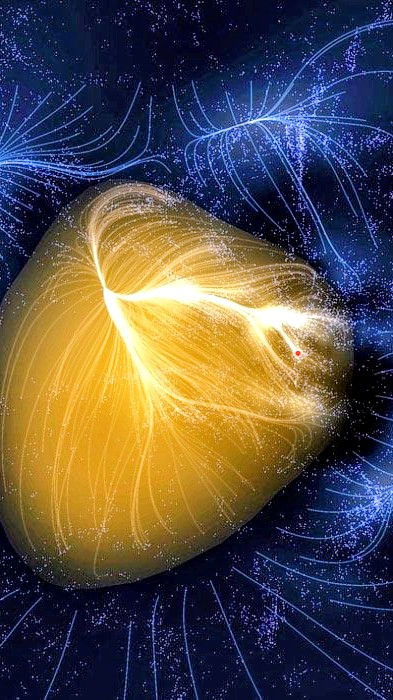
I find that image profoundly symbolic.
The Father.
The One.
The Great Mystery.
The Source toward which everything moves.
Whether one understands this literally, spiritually, or metaphorically, it reminds us that nothing stands still.
Everything is journeying.
Perhaps humanity is as well.
Remembering
I do not ask anyone to abandon their faith.
I simply invite questions.
What if ancient wisdom was never destroyed, only translated?
What if the Sun has always been one of God's greatest teachers?
What if Jesus came not only to be worshipped, but to show humanity what it means to become Light?
I believe pieces of this story have been left throughout history—within scripture, ancient civilizations, sacred art, astronomy, mythology, and even within our own lives.
The task is not to be told.
The task is to remember.
For those who are seeking, questioning, and willing to stretch beyond familiar boundaries, perhaps these pieces are waiting to be assembled—not into a new religion, but into a deeper understanding of the One Light expressed through many traditions.
The invitation has always been there.
The question is whether we are ready to see it.

Comments