
The Knife Behind the Betrayer: What Are We Really Looking At?

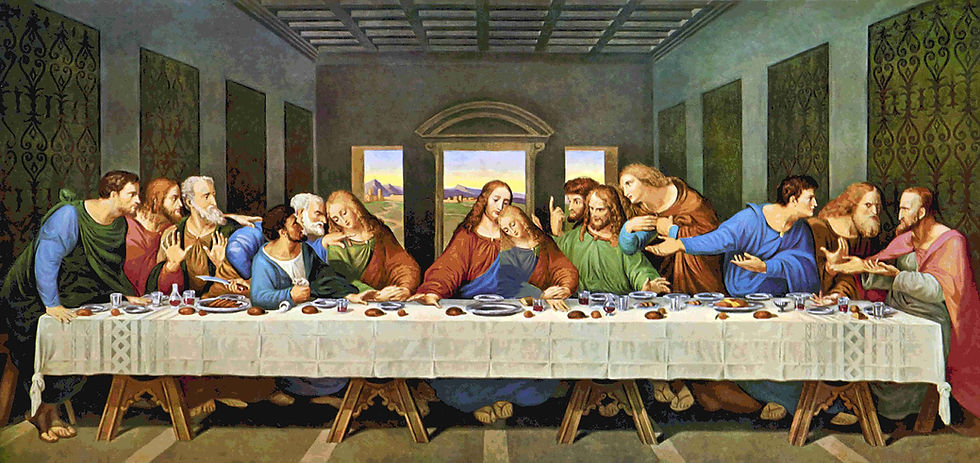
Most people approach The Last Supper believing they already know what it says.

A betrayal.
A warning.
A tragedy about to unfold.
But Leonardo da Vinci did not paint what was obvious. He painted what was dangerous.
Look again.

Peter stands behind Judas. His hand grips a knife. Not raised. Not used. Simply there.
Why?
If this moment is only about Judas’ betrayal, the knife does not belong at the table. Violence comes later, in the garden. And yet Leonardo places the blade here—quiet, concealed, intentional.
That alone should make us uneasy.
Two Betrayals, Not One
Judas’ betrayal is easy to see. It is transactional. Obvious.
Condemned.
Thirty pieces of silver. A kiss. A name remembered forever as treachery.
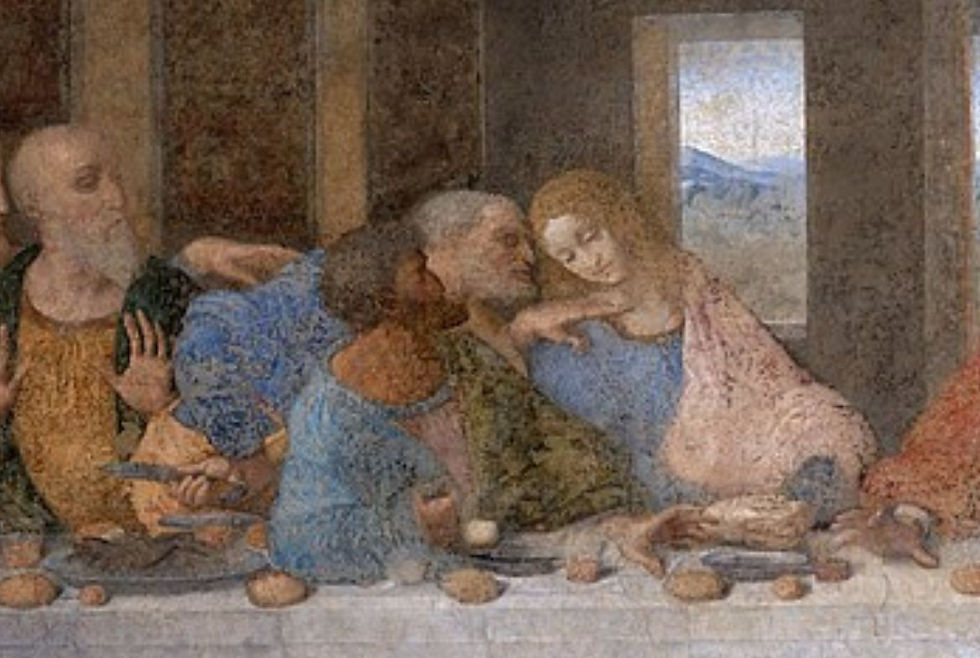
Peter’s betrayal is harder to face—because it doesn’t look like betrayal at all.
Peter loves Jesus. He wants to protect him. He wants order. Continuity. Safety.He wants the message to survive.
And that is precisely where danger enters.
Judas ends the body.
Peter survives to shape the story.
History rarely belongs to those who die for truth. It belongs to those who organize it.
Why Peter Stands Behind Judas
In sacred art, position is meaning.
The figure in front performs the visible act.
The figure behind applies pressure.
Judas holds money. Peter holds steel.
Economy and force. Transaction and authority.

These are not random props. They are the currencies of every empire that has ever existed—religious or otherwise.
Peter stands behind Judas because betrayal does not end with the traitor. It evolves. It refines itself. It becomes respectable.
Killing a Man Is Easy. Killing a Teaching Takes Time.
Truth rarely dies by execution.
It dies by codification.
When living wisdom becomes rigid doctrine.
When direct experience becomes mediated authority.
When mystery becomes policy.

No knife is required—only certainty.
Perhaps the blade in Peter’s hand is not meant for flesh at all.
Perhaps it is aimed at something far more fragile.
The Silence at the Center
Jesus does not react.
He does not look at Judas.
He does not flinch at the knife.
He remains still—because truth does not defend itself. It does not argue. It does not organize.
It simply is.
Everything else at the table moves around it.

The Question the Painting Asks You
Leonardo does not tell us who is right. He does not accuse. He does not explain.
He only asks—through posture, gesture, and tension:
Where does betrayal truly begin?
Is it in the one who sells truth…
Or in the one who preserves it by reshaping it?
And more uncomfortably:
Would you recognize the knife if it were in your own hand?
Looking for the Truth
Truth does not demand belief.
It demands attention.
It asks us to look again—at history, at institutions, at ourselves.Not to destroy them, but to see where living wisdom hardened into structure.

Leonardo painted this not so you would agree with him.
He painted it so you would pause.
And perhaps, in that pause, remember that truth was never meant to be owned—only lived.


Comments